

We print in Verden (Aller), Lower Saxony, in a workshop of our own. FDM, SLA and SLS sit side by side there. The first order came in March 2019 and FDM-Druckservice has been running ever since. The owner is Jens Rahjes.
We print on Formlabs and Prusa machines with materials sourced in Europe. This page tells you what we work with – and where the three processes reach their limits. The second part is there on purpose: if you know in advance what a part will look like, you are less likely to order the wrong thing.
In Verden (Aller) since March 2019
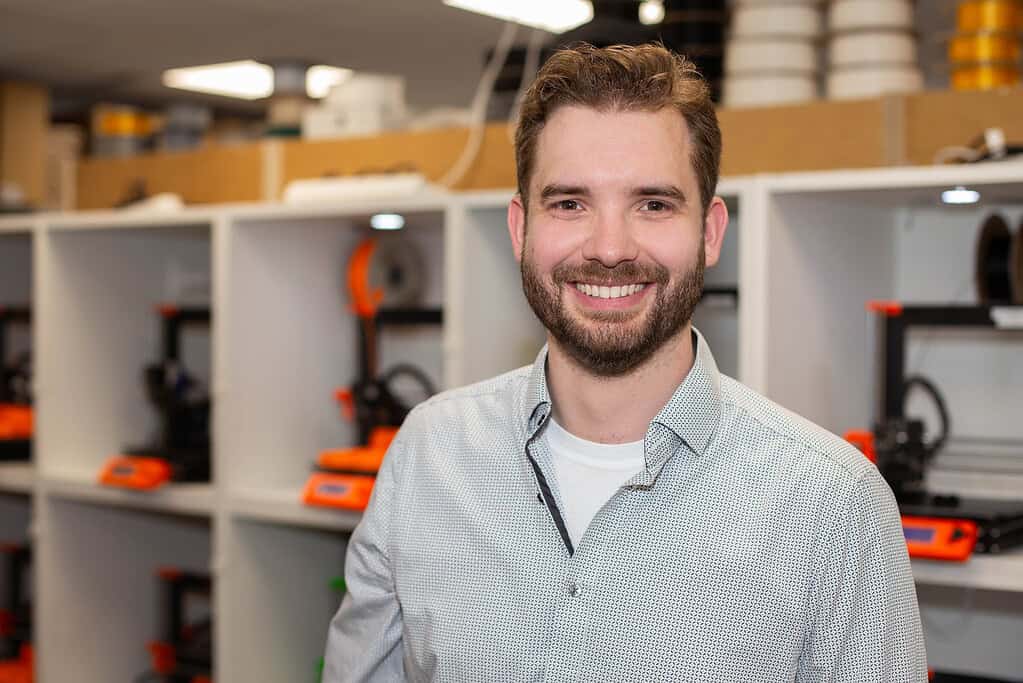
Despite the name, there are three processes: FDM, SLA and SLS all run in the same workshop. We make everything ourselves and buy nothing in. That is the practical difference from a brokerage platform: a part can still be reoriented before printing or moved to a different process without bringing in a second supplier and a second schedule.
The owner shares the work on the machines with his staff. On the phone it is always him – whoever calls speaks to the managing director, not to a hotline.
The same workshop is behind all three addresses: fdm-druckservice.de, fdm-druckservice.at for Austria and fdm-druckservice.com in English.
Three processes under one roof
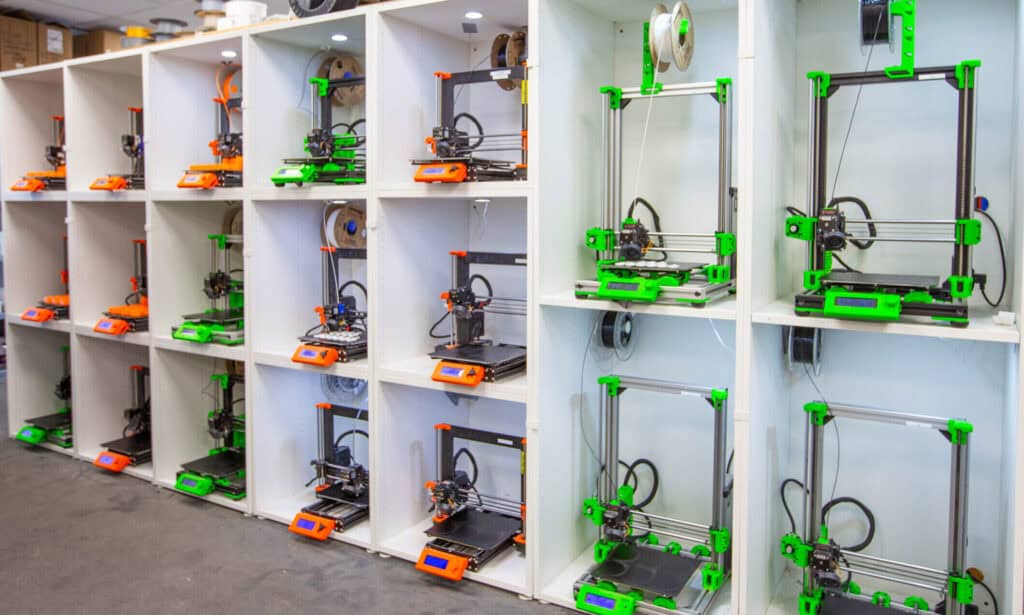
Which process suits a part comes down to three questions: how big it is, how fine it needs to be and what it has to withstand. Because all three are here, the part decides – not whichever machine happens to be free.
What we print with
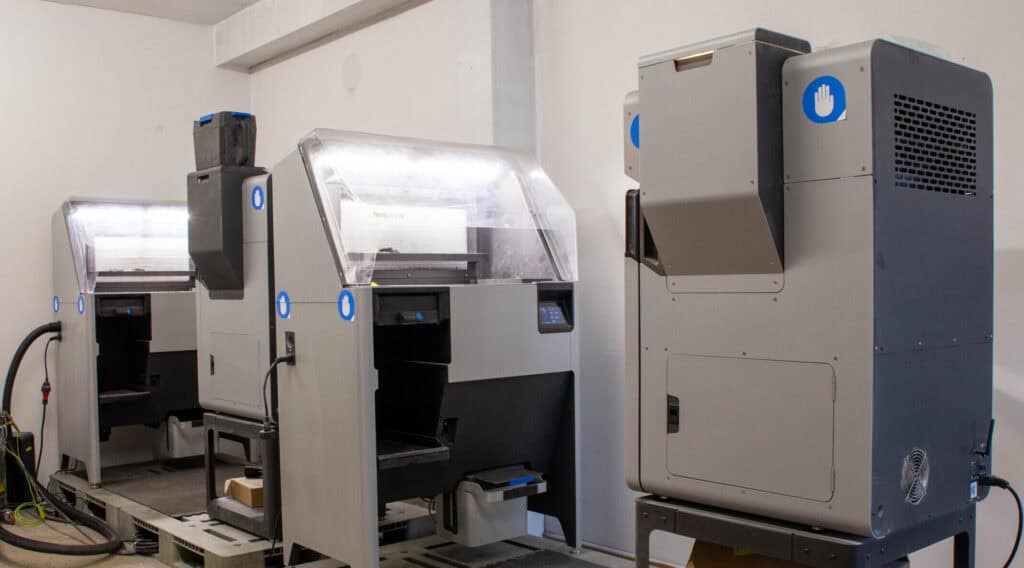
For SLA and SLS we use machines and materials from Formlabs: the Form 4 for resin, the Fuse 1 for laser sintering. Resin and machine come from the same manufacturer and are matched to each other – the material profiles are not an approximation but the manufacturer’s own. With resin that makes the biggest difference, because material data and exposure are directly linked.
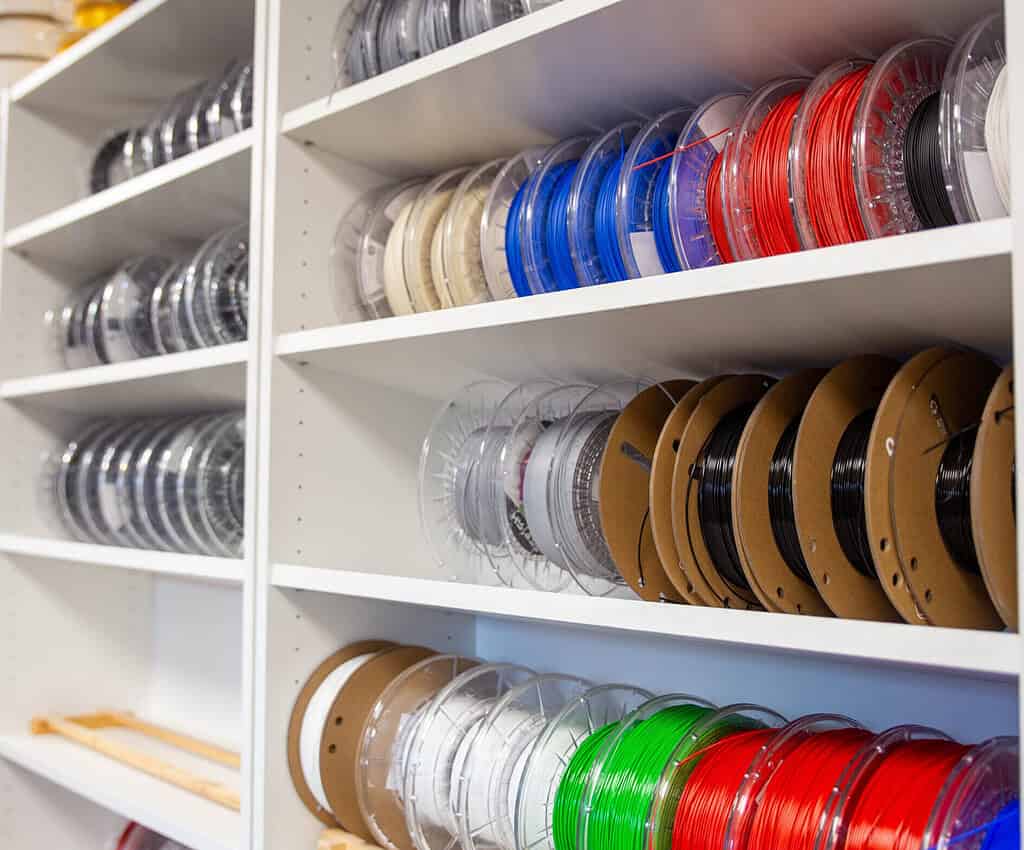
Not all of the resins are about looks: Tough 1500 and Tough 2000 are designed for impact and load, Rigid 10K – glass-filled – for stiffness and dimensional stability under load, Castable Wax for investment casting, Elastic 50A (on request only) for rubber-like parts. Which resin suits which job is shown by the material finder.
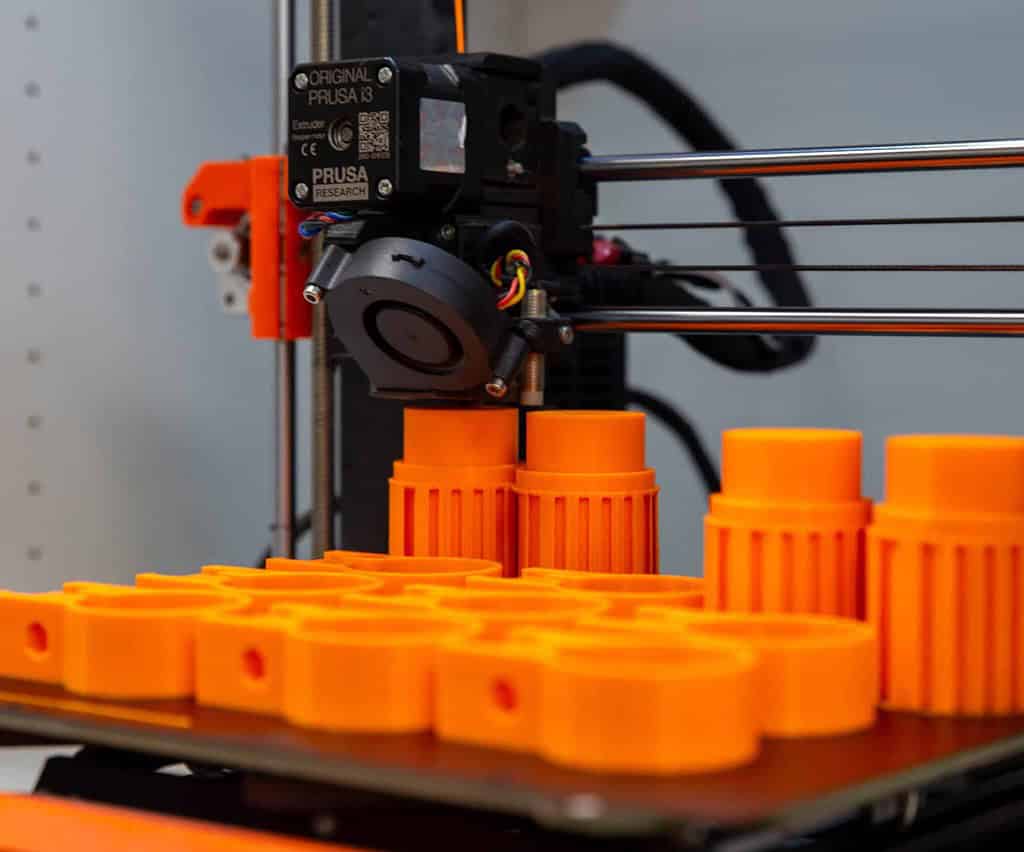
For FDM we run printers from Prusa – a European manufacturer whose machines are openly documented and, in part, user-serviceable. Our filaments are sourced exclusively in Europe.
Many of these printers run at the same time. A larger order therefore does not block the single parts next to it – and larger quantities still ship promptly.
Where the processes reach their limits
Each of the three processes has a compromise you can see. We would rather write it down beforehand than explain it afterwards.
At 0.15 to 0.20 mm layer height you can see how the part was made. An FDM part looks like an FDM part. Where that matters, SLA is the better choice.
This is where SLA reaches its limit: printed resins do not withstand permanent sunlight. For parts that live outdoors there is UV protection as a finishing option – or the part goes to FDM in ASA.
Sintered surfaces are rough and grainy; that is normal for laser sintering. If appearance matters, the part can be dyed.
There is quite a bit you can do about each compromise: dyeing for SLS parts, sealing with Dichtol, UV protection, heat-set threaded inserts from M2 to M10 in FDM and SLA parts, and on request removal of the support structures on SLA parts. What makes sense depends on where the part will be used; that is best discussed on the phone.
You decide which process
After upload, the price calculator shows the prices for all three processes side by side, not one after the other – with a 3D preview and an AI recommendation for process and material. The recommendation is a suggestion, not a rule: you see all three prices and decide yourself.
You can upload STL, OBJ, 3MF, STEP, IGES and BREP files up to 256 MB. STEP and IGES are converted on the server, so there is nothing to export beforehand.
If there is no model yet: the AI 3D model generator, the AI CAD model generator, the relief generator, the cookie cutter generator and the ring designer produce print-ready files, free of charge. The material finder helps with the choice of material. 3D modelling from a sketch or photo is available on request.
From one part upwards
We print from a single part. There are no set-up charges, no tooling costs and no surcharge for it being only one part. The minimum order value is €3 for the order as a whole – individual parts often cost less.
The volume discount is based on the cart value, not the quantity, and is applied automatically in the cart: 10 % from €50, 15 % from €100, 20 % from €200. Five different parts count just like five identical ones.
Made-to-order parts take 15 to 21 days, under a week with express; stock items ship in 1 to 3 working days. We ship to Germany and 26 EU countries for €4.99, free from €75 order value. For every completed order our partner Tree-Nation plants a tree.
If something is not right
Reviews run through the Google Business Profile and Trustpilot – unfiltered and without any star maths of our own. Trustpilot invitations go out only after completed orders; only people who have actually ordered can review.
If something is not right with a part, the quickest route is the phone: Monday to Friday, 10 am to 5 pm, on +49 163 2200275.
Upload a file, see the price
Load your model into the price calculator and see within seconds what it costs in FDM, SLA and SLS – binding, with a 3D preview, from a single part.